Green Junglefowl (Gallus varius): The Wild Emerald Ancestor of the Islands
Among the world’s wild galliformes, few species are as biologically unique—or as visually mesmerizing—as the Green Junglefowl (Gallus varius). Native to the Indonesian archipelago and unlike any other member of the genus Gallus, this extraordinary bird is often described as one of the most exotic wild chickens on earth.
With iridescent scale-like plumage, unmistakable facial coloration, a singularly ornate comb, and vocalizations unlike domestic chickens, the Green Junglefowl stands apart not only as a stunning avian species, but as a critical piece of evolutionary and avicultural significance.
For serious aviculturists, Gallus varius is not simply another junglefowl—it is a living relic of wild genetics, island adaptation, and one of the most distinct species within the entire pheasant family.
Scientific Classification
- Common Name: Green Junglefowl
- Scientific Name: Gallus varius
- Order: Galliformes
- Family: Phasianidae
Green Junglefowl is one of four primary wild junglefowl species:
- Red Junglefowl (Gallus gallus)
- Grey Junglefowl (Gallus sonneratii)
- Sri Lankan Junglefowl (Gallus lafayettii)
- Green Junglefowl (Gallus varius)
Evolutionary Importance:
Unlike Red Junglefowl—the principal ancestor of domestic chickens—the Green Junglefowl followed its own specialized evolutionary path on isolated islands, developing traits and aesthetics dramatically distinct from domestic poultry.
Physical Description: A Wild Bird Unlike Any Other
The Green Junglefowl male is one of the most visually distinctive members of Gallus.
Male Characteristics:
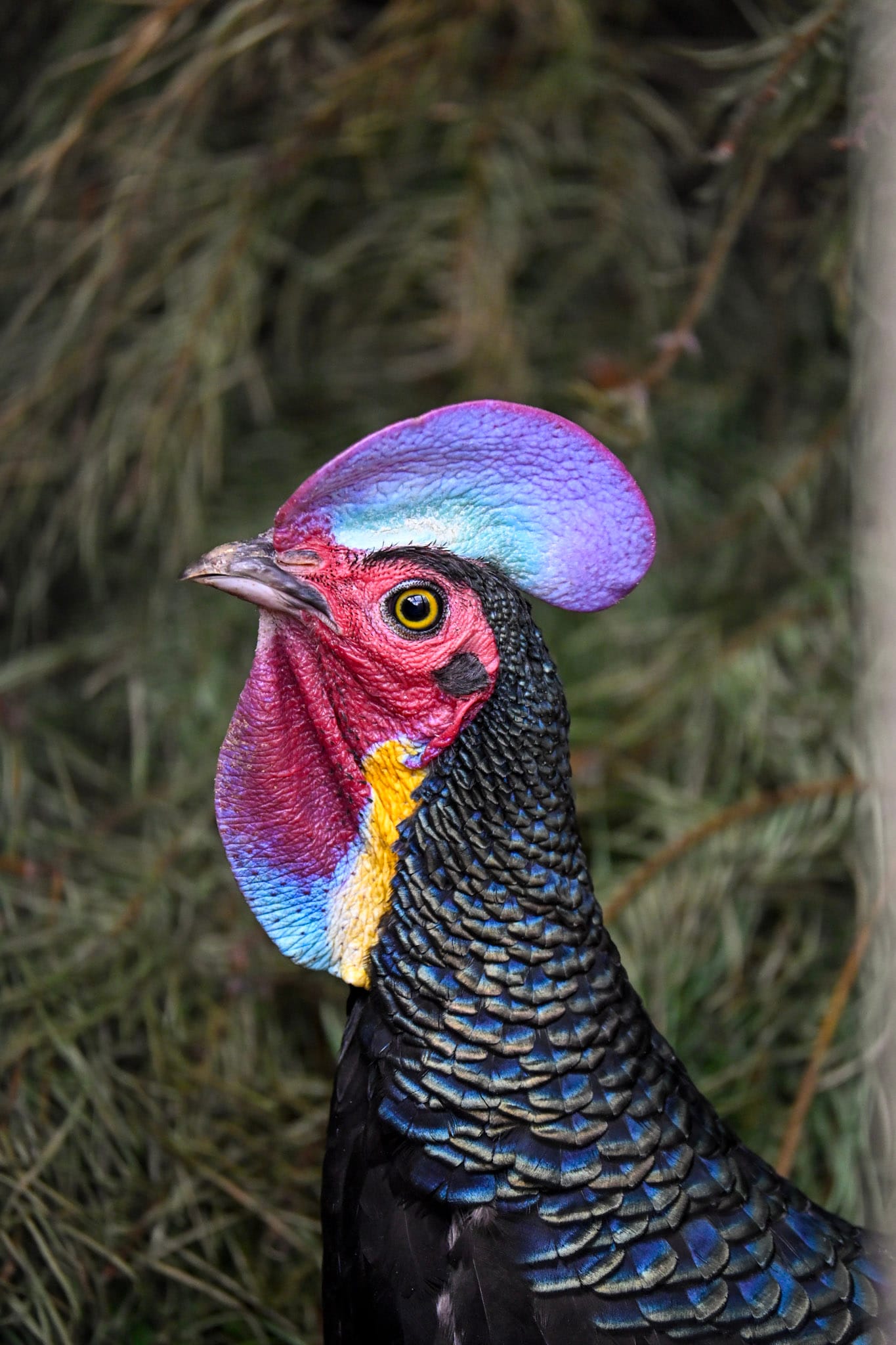
- Metallic green, blue, and bronze iridescent plumage
- “Scaled” feather appearance due to shimmering pattern structure
- Long flowing sickles
- Unique multicolored comb (often yellow, blue, purple, or red hues)
- Distinctive dewlap/wattle structure
- Slate to grayish legs
- More delicate, refined body structure than many domestic breeds
Female Characteristics:
Hens are more subdued with mottled browns and greens but remain elegant and wild in appearance.
Native Range & Habitat
Green Junglefowl is endemic to:
- Java
- Bali
- Lombok
- Komodo
- Flores
- Other Indonesian islands
Preferred Habitat:
- Dry coastal forests
- Scrublands
- Mangrove edges
- Secondary forest
- Open woodland
Unlike some junglefowl that favor dense inland forests, Gallus varius often thrives in drier, lower-elevation island habitats.
Wild Status & Conservation
IUCN Status: Least Concern (LC)
While still relatively widespread within its native range, Green Junglefowl populations face growing pressures.
Threats Include:
- Habitat destruction
- Hunting and trapping
- Crossbreeding with domestic chickens
- Human population expansion
Major Conservation Concern:
Hybridization is one of the greatest long-term threats to pure Green Junglefowl genetics, particularly where domestic birds are introduced.
For aviculture, this should sound familiar: species preservation requires vigilance.
Behavior & Ecology
Green Junglefowl displays behavioral traits both familiar and distinctly alien to domestic chicken keepers.
Key Behavioral Facts:
- Ground foragers
- Agile flyers
- Strong roosting instincts
- Extremely alert and wary
- Often more flighty than Red Junglefowl
- Diet includes:
- Seeds
- Fruits
- Insects
- Shoots
- Small invertebrates
Vocalization:
Their calls are notably different from domestic roosters—higher, more complex, and often described as uniquely “wild” or almost whistling in quality.
Aviculture Significance
Green Junglefowl holds a special place among advanced aviculturists due to its rarity, beauty, and genetic importance.
Why They’re Coveted:
1. Distinctive genetics
No other Gallus species looks quite like varius.
2. Extraordinary aesthetics
Their iridescence and comb structure are unmatched.
3. Conservation value
Maintaining pure bloodlines is increasingly important.
4. Educational importance
They help illustrate the diversity within wild junglefowl.
Critical Aviculture Warning: Hybridization
Green Junglefowl has historically been crossed with domestic chickens, producing hybrids such as “Bekisar” in Indonesia.
While culturally significant in some contexts, these hybrids pose major concerns for conservation-focused breeding.
For Serious Wild-Type Preservation:
- Avoid all hybrid pairings
- Maintain verified pure bloodlines
- Source from trusted breeders
- Keep separate from domestic fowl
- Educate others on species integrity
For true preservationists, Green Junglefowl should remain Gallus varius—not a novelty cross.
Captive Care Considerations
Green Junglefowl often require more attentive management than standard domestic poultry.
Recommended Setup:
- Secure covered aviaries (excellent flyers)
- Warm climate or cold protection
- Dry environments
- Visual cover
- Elevated roosting areas
- Low-stress husbandry
Temperament:
Often more nervous and reactive than domestic breeds, making quiet environments beneficial.
Breeding Facts
- Seasonal breeding tendencies may vary by climate
- Smaller clutch sizes than many domestic chickens
- Hens are often highly protective
- Chicks are fast, alert, and exceptionally wild in behavior
Breeding success often improves when birds are kept in stable, low-disturbance environments.
Green Junglefowl & Domestic Poultry History
Though not the primary ancestor of modern chickens, Green Junglefowl has contributed genetically in specific hybrid contexts and remains an important species for understanding the broader evolution of Gallus.
Its differences in morphology, vocalization, and ecology highlight how diverse wild junglefowl truly are.
Conservation Through Aviculture
Green Junglefowl may not be the most common species in collections—but that scarcity increases its importance.
Responsible Aviculture Can:
- Protect pure lines
- Prevent genetic loss
- Educate future breeders
- Preserve island biodiversity representation
- Counter hybridization trends
For wild-type breeders, keeping Green Junglefowl is often less about ownership—and more about guardianship.
Final Thoughts
The Green Junglefowl is one of aviculture’s most extraordinary species—a bird that feels both ancestral and alien.
It represents:
Evolution. Purity. Island adaptation. Genetic responsibility.
In a world where hybridization and commercialization can quickly blur biological lines, preserving Gallus varius is about honoring one of nature’s most distinctive wild fowl exactly as it was shaped.
Not diluted.
Not domesticated.
Not confused.
Simply Gallus varius.
A wild emerald of the islands—and one of aviculture’s most important living treasures.