Golden Pheasant (Chrysolophus pictus): The Living Flame of the Forest
Few birds on earth are as instantly recognizable—or as widely admired—as the Golden Pheasant (Chrysolophus pictus). Often described as one of the most spectacularly colored birds in the world, this legendary species has captivated aviculturists, conservationists, and bird enthusiasts for centuries.
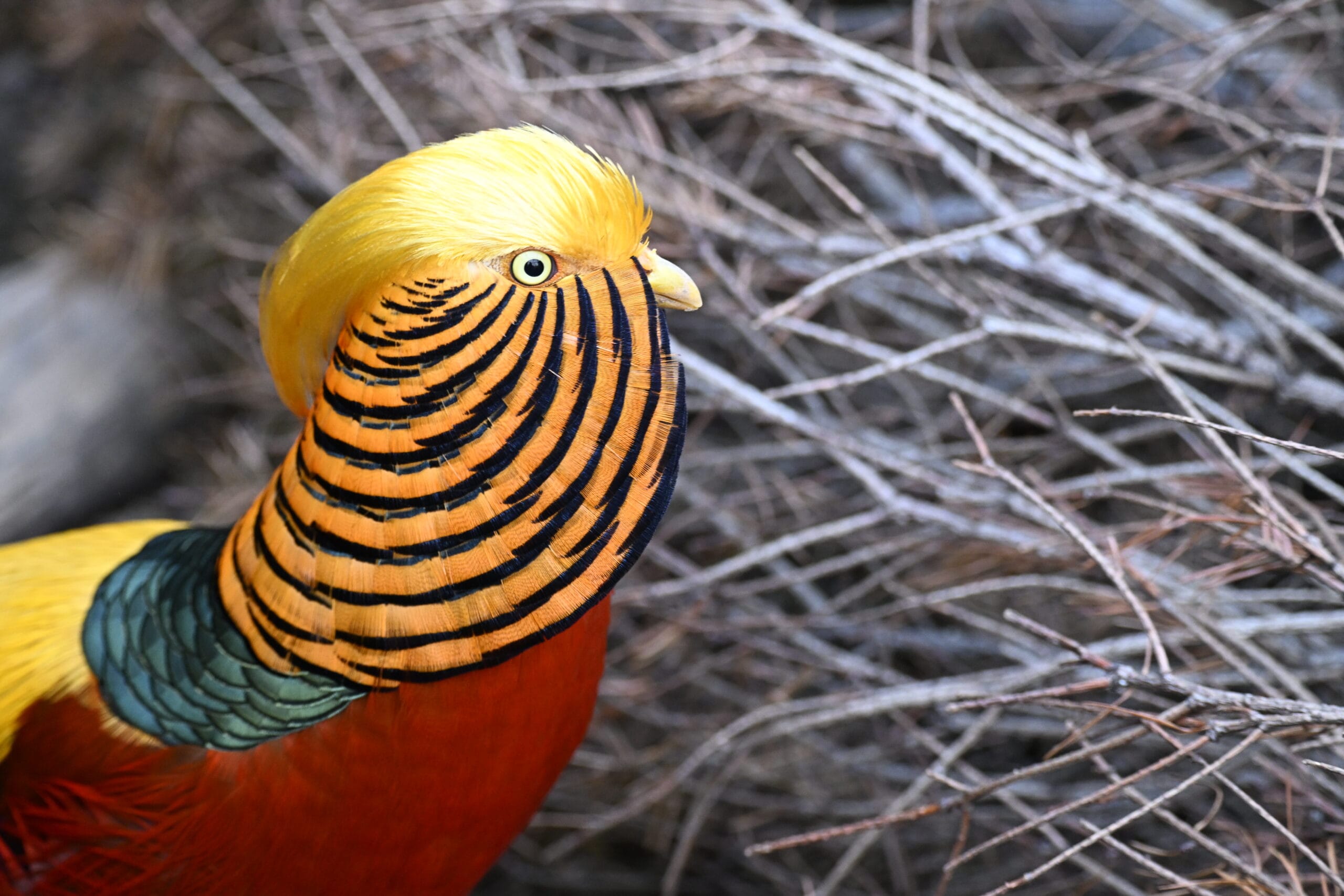
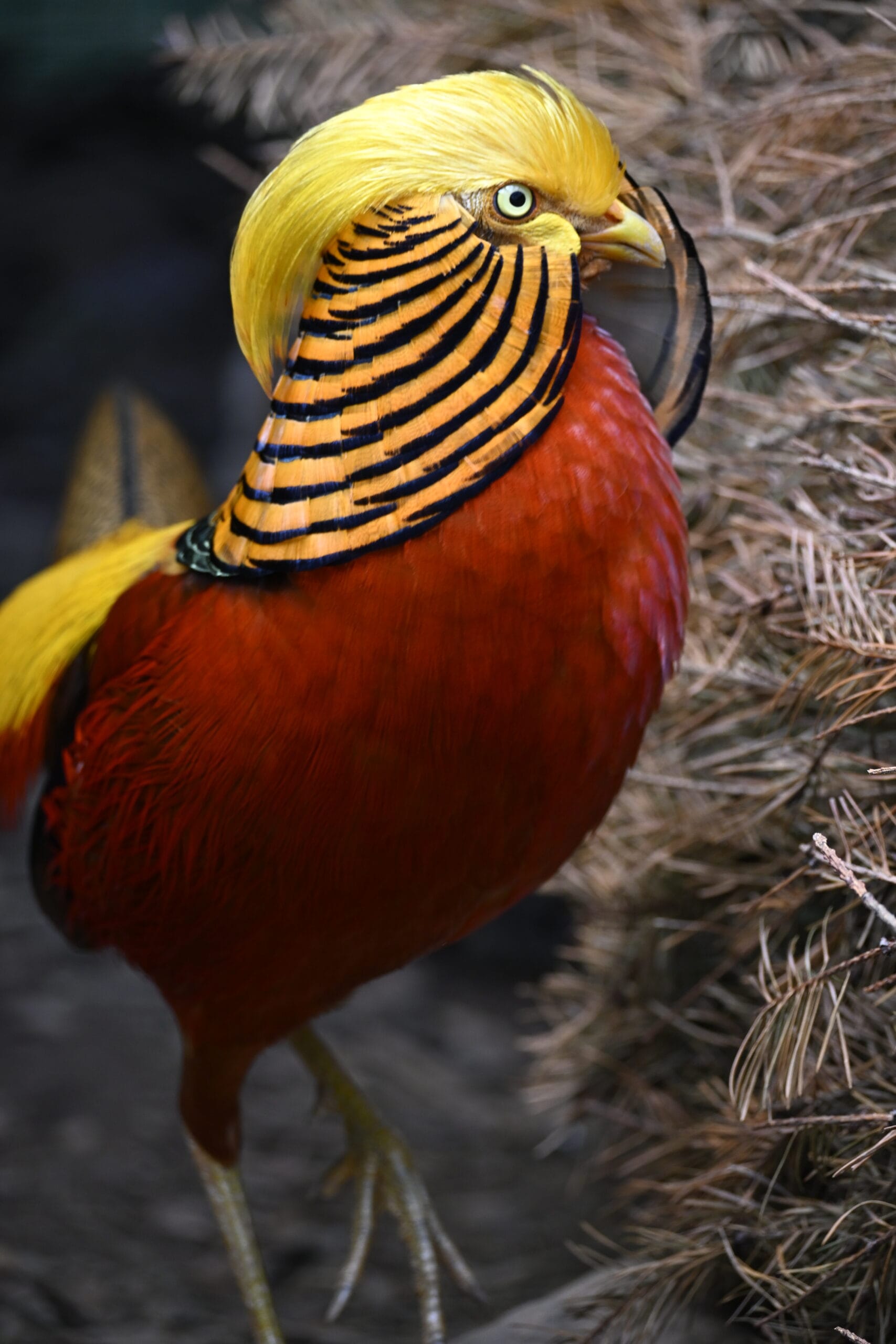
With its radiant golden crest, fiery scarlet underparts, emerald mantle, and intricately banded cape, the Golden Pheasant is more than just visually stunning—it is one of aviculture’s foundational species. Yet beneath its beauty lies an important story of taxonomy, habitat, conservation, and the responsibility of preserving true wild-type bloodlines.
For many, the Golden Pheasant is an entry point into ornamental pheasants. For serious breeders, however, it represents something much deeper: a species whose true form deserves protection from dilution, misinformation, and hybridization.
Scientific Classification
- Common Name: Golden Pheasant
- Scientific Name: Chrysolophus pictus
- Order: Galliformes
- Family: Phasianidae
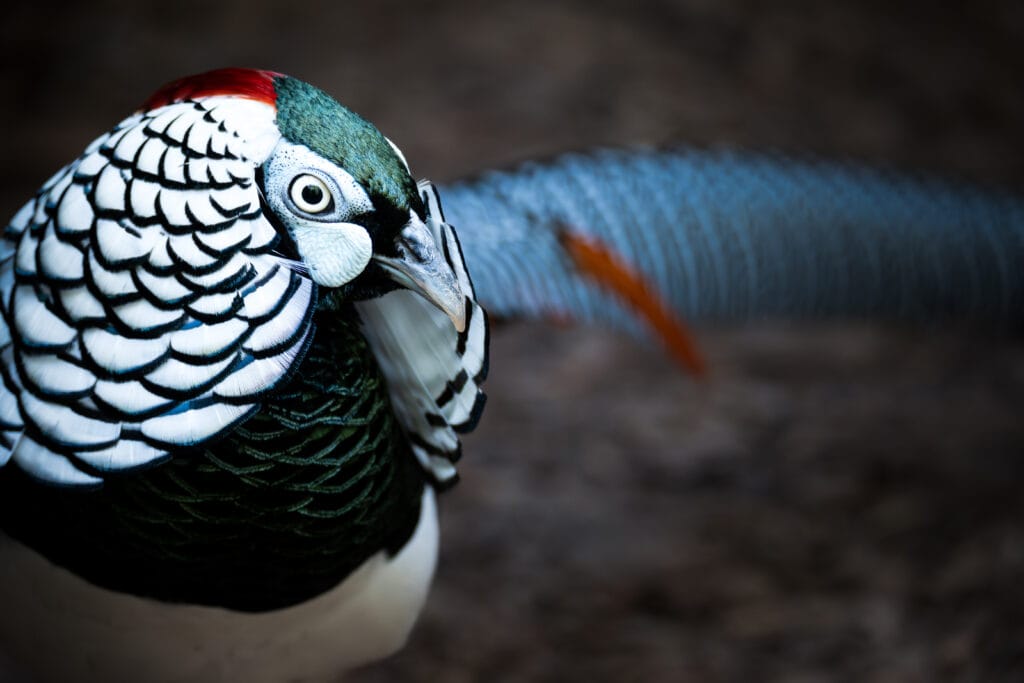
Golden Pheasants are one of only two species in the genus Chrysolophus, alongside Lady Amherst’s Pheasant (Chrysolophus amherstiae).
Important Taxonomic Note:
The term “Red Golden Pheasant” is commonly used in aviculture, but true wild-type Chrysolophus pictus is simply the Golden Pheasant. Many “red” variants and selectively bred lines stem from captive mutations, selective enhancement, or questionable lineage—not distinct wild species.
For conservation-focused aviculture, this distinction matters.
Physical Description: Nature’s Masterpiece
The mature male Golden Pheasant is one of the most vibrant birds alive.
Male Characteristics:
- Brilliant golden-yellow crest
- Orange and black barred cape
- Scarlet-red chest and underparts
- Green upper back mantle
- Blue shoulder highlights
- Long cinnamon-brown tail with dark barring
Female Characteristics:
Females are dramatically more subdued:
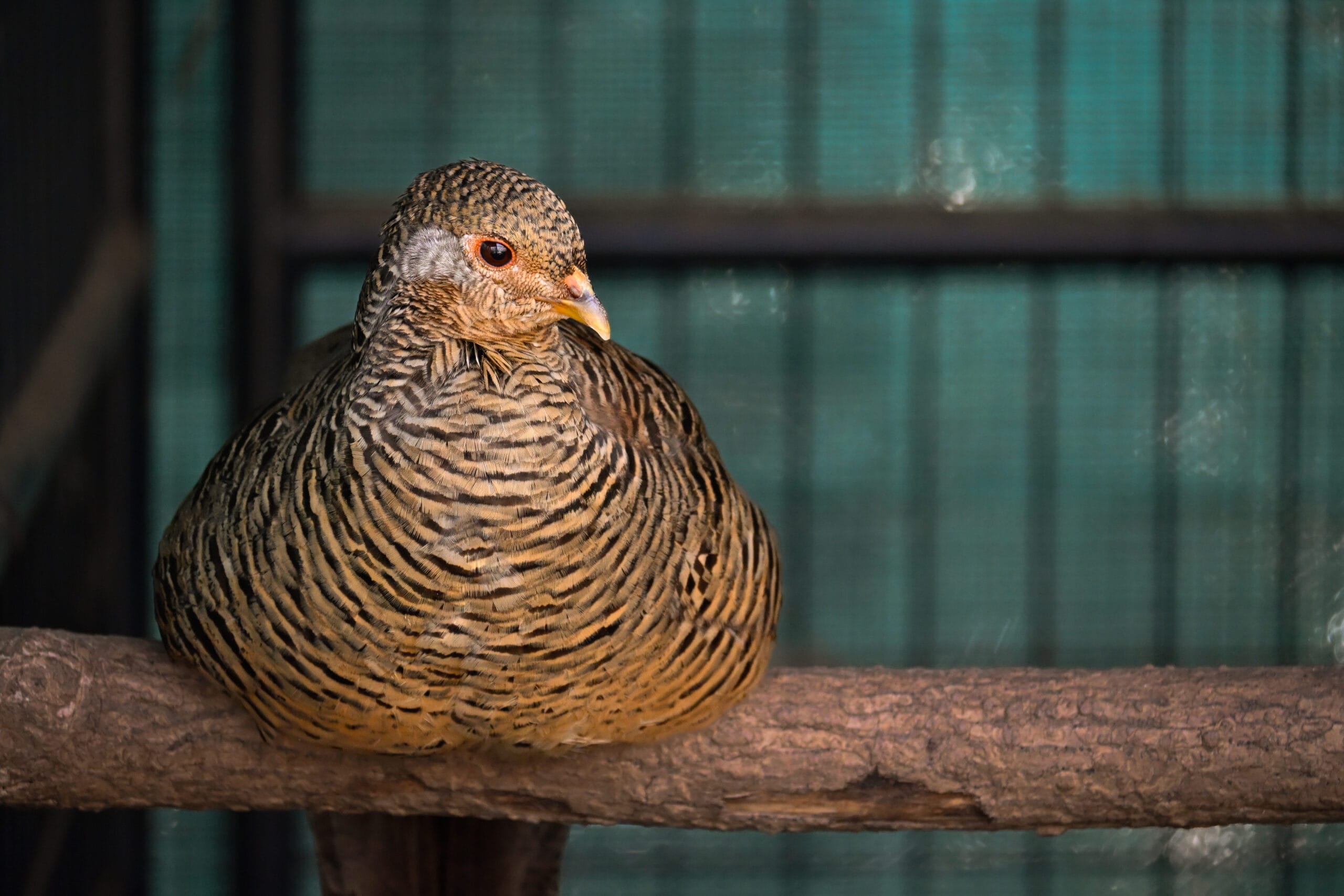
- Mottled brown and buff plumage
- Dark barring
- Exceptional camouflage
This natural sexual dimorphism reflects survival strategy—males attract, females conceal.
Native Range & Habitat
Golden Pheasants are native to the mountainous forests of western and central China.
Preferred Habitat:
- Dense coniferous and mixed forests
- Bamboo thickets
- Shrublands
- Mountain valleys
- Forest edges
They generally inhabit elevations ranging from approximately 1,000–2,500 meters, favoring dense understory where cover is abundant.
Wild Status & Conservation
IUCN Status: Least Concern (LC)
Golden Pheasants remain relatively widespread, but localized threats persist.
Primary Threats:
- Deforestation
- Habitat fragmentation
- Agricultural expansion
- Hunting pressure
Though globally stable, habitat loss in native regions underscores the importance of preserving both wild ecosystems and accurate captive populations.
Behavior & Ecology
Despite their dazzling appearance, Golden Pheasants are surprisingly elusive in the wild.
Behavioral Facts:
- Ground foragers
- Strong but short-distance fliers
- Roost in trees at night
- Diet includes:
- Seeds
- Grains
- Berries
- Insects
- Shoots
- Leaves
Golden Pheasants are often shy and secretive, relying heavily on dense vegetation for protection.
Golden Pheasants in Aviculture
Golden Pheasants are among the most widely kept ornamental pheasants worldwide—and for good reason.
Why They’re Popular:
1. Exceptional visual appeal
Arguably one of the most recognizable ornamental pheasants globally.
2. Relative hardiness
Adaptable to a wide range of climates when properly sheltered.
3. Beginner accessibility
Often recommended as an introductory pheasant species.
4. Strong reproductive potential
Can be productive seasonal breeders.
Responsible Aviculture: Preserving the True Golden
Because Golden Pheasants are so common in captivity, they are also vulnerable to one of aviculture’s greatest pitfalls:
Genetic dilution.
Risks Include:
- Crossing with Lady Amherst’s
- Mutation-focused breeding
- Selective exaggeration of coloration
- Mislabeling bloodlines
For breeders committed to species preservation, maintaining true wild-type Chrysolophus pictus should be a top priority.
Best Practices:
- Source from reputable wild-type breeders
- Avoid hybrid or “designer” lines
- Understand lineage
- Prioritize species integrity over novelty
True conservation begins with accuracy.
Aviary Requirements
Golden Pheasants are active and hardy, but quality husbandry matters.
Ideal Setup:
- Spacious flight pens
- Dry, well-drained substrate
- Shelter from wet/cold extremes
- Shrubs or visual barriers
- Elevated roosts
Special Considerations:
Males can become territorial during breeding season, and overcrowding can increase aggression.
Breeding Facts
- Typical clutch size: 5–12 eggs
- Incubation: ~22–23 days
- Seasonal laying often begins in spring
- Chicks are precocial and fast-growing
Golden hens can be productive, though maternal instincts vary depending on line and management.
Global Presence & Introduced Populations
Golden Pheasants have been introduced to several countries outside their native range, including parts of the UK, where small feral populations exist.
These populations are biologically interesting—but they do not replace the value of preserving native wild-type genetics.
Golden Pheasants as Educational Ambassadors
Because of their beauty and accessibility, Golden Pheasants often serve as ambassadors for:
- Ornamental pheasant keeping
- Youth engagement in aviculture
- Conservation education
- Species awareness
For many future breeders, the Golden Pheasant is their first spark—and that spark often leads to deeper conservation values.
Final Thoughts
The Golden Pheasant is one of aviculture’s most iconic birds—not merely because it is beautiful, but because it represents the crossroads of admiration and responsibility.
It embodies:
Beauty. Accessibility. History. Genetic stewardship.
In a world increasingly fascinated by novelty, preserving the authentic Golden Pheasant means respecting the species as nature designed it.
Not exaggerated.
Not hybridized.
Not rebranded.
Simply Chrysolophus pictus—the Golden Pheasant.
A living flame in the forest, and a reminder that true wild-type aviculture is as much about preservation as it is passion.