Lady Amherst’s Pheasant (Chrysolophus amherstiae): The Elegant Ghost of the Mountain Forest
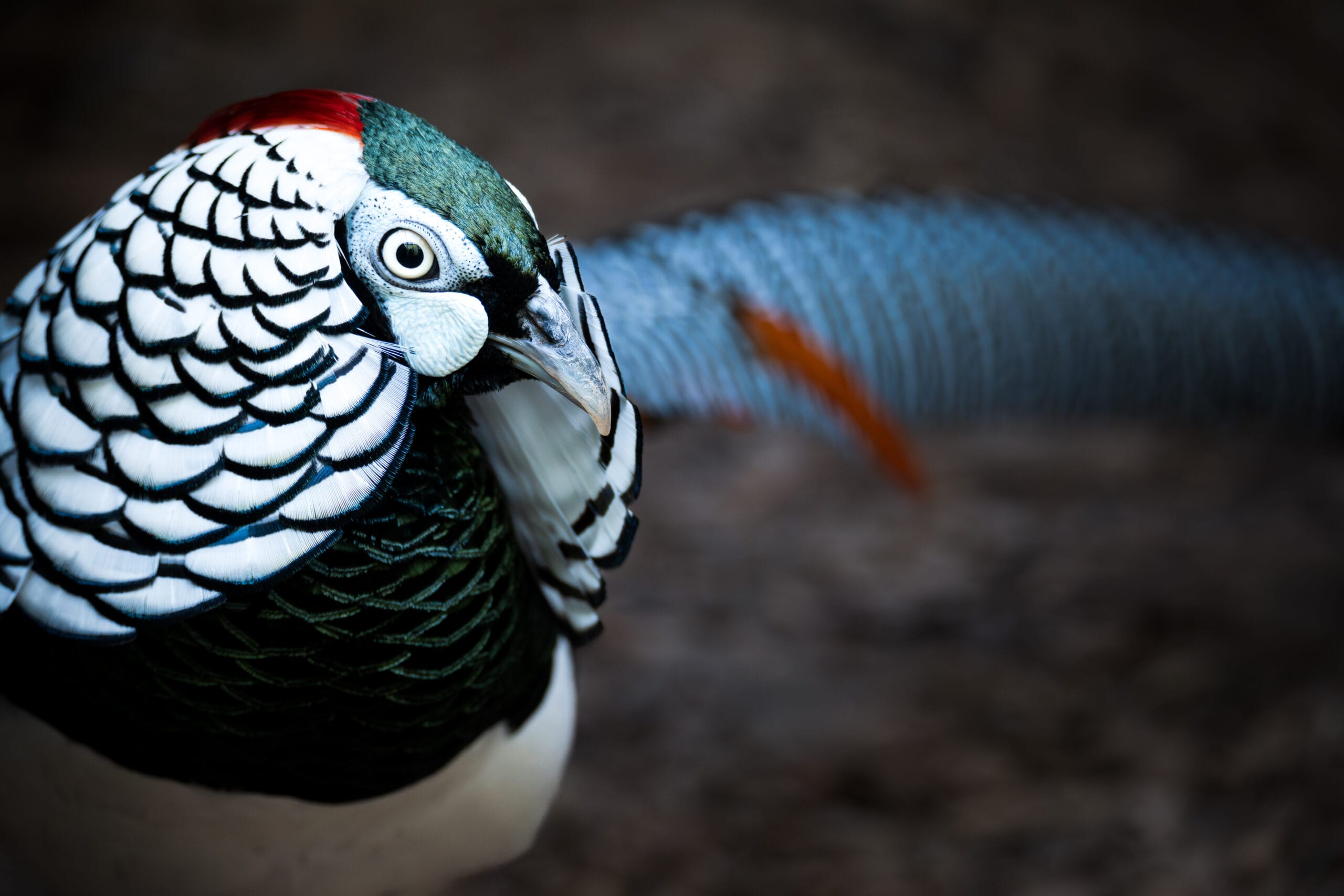
Few birds in the avicultural world rival the sheer elegance and unmistakable beauty of Lady Amherst’s Pheasant (Chrysolophus amherstiae). With its dramatic black-and-white cape, impossibly long barred tail, metallic green crown, and vivid flashes of scarlet, this species has captivated bird enthusiasts, collectors, and conservation-minded breeders for generations.
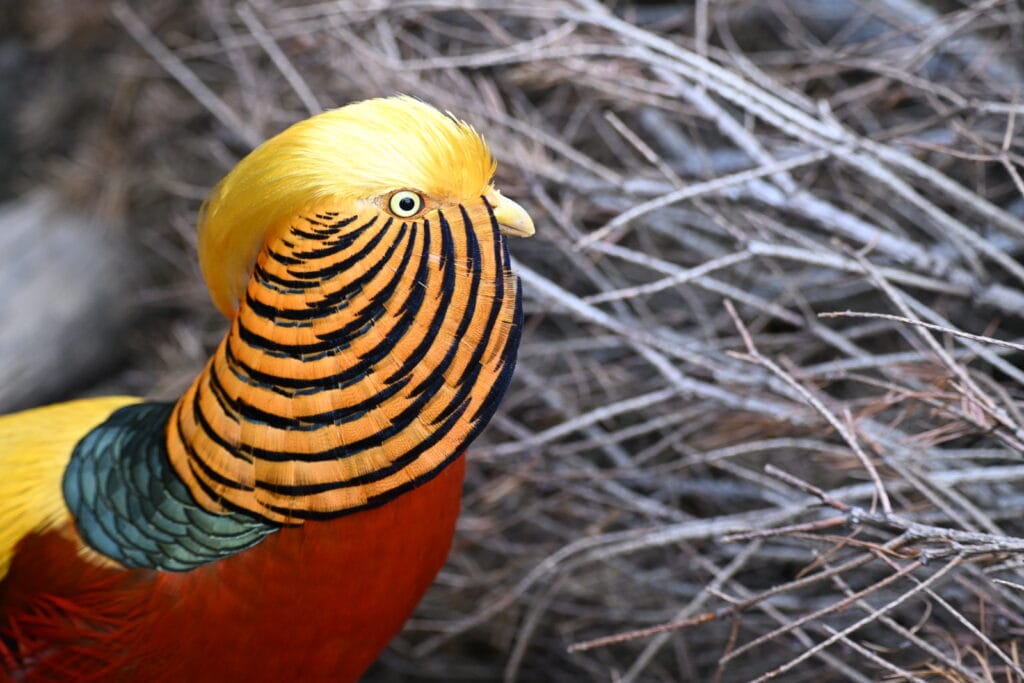
Named in honor of Sarah Amherst, wife of William Pitt Amherst (Governor-General of India in the early 1800s), Lady Amherst’s Pheasant is one of the world’s most iconic ornamental pheasants. Closely related to the Golden Pheasant (Chrysolophus pictus), this species is often considered one of the most visually refined members of the pheasant family—and a staple among serious wild-type collections.
Scientific Classification
- Common Name: Lady Amherst’s Pheasant
- Scientific Name: Chrysolophus amherstiae
- Order: Galliformes
- Family: Phasianidae
Lady Amherst’s is one of only two species within the genus Chrysolophus, alongside the Golden Pheasant. While hybridization between the two has occurred in captivity, preserving pure bloodlines remains critically important for conservation-focused aviculture.
Physical Description: Regal by Design
The mature male Lady Amherst is one of nature’s finest examples of ornamental perfection.
Male Characteristics:
- Metallic emerald-green crown
- White cape with bold black scaling pattern
- Scarlet crest and rump accents
- Long silver-gray and black barred tail (often exceeding body length dramatically)
- White underparts with dark scaling
- Red facial wattles
Female Characteristics:
Like many pheasants, hens are cryptically colored in mottled browns and buffs, allowing superior camouflage during nesting.
Native Range & Habitat
Lady Amherst’s Pheasant is native primarily to:
- Southwestern China
- Northern Myanmar (Burma)
Preferred Habitat:
- Mountain forests
- Dense understory woodland
- Bamboo thickets
- Shrub-covered slopes
- Forest edges
They are generally found in cool upland habitats, often between 2,000–3,600 meters elevation, where dense cover offers protection from predators.
Wild Status & Conservation
IUCN Status: Least Concern (LC)
While Lady Amherst’s remains relatively widespread in parts of its range, local populations face increasing pressure.
Threats Include:
- Habitat destruction from logging and agriculture
- Fragmentation of mountain forests
- Hunting and trapping
- Human encroachment
Though not currently considered globally threatened, regional declines make responsible habitat conservation and wild-type aviculture increasingly valuable.
Behavior & Ecology
Lady Amherst’s Pheasant is often more elusive than its bright plumage suggests.
Behavioral Highlights:
- Ground-dwelling but capable of strong flight
- Roosts in trees for safety
- Omnivorous diet:
- Seeds
- Shoots
- Berries
- Insects
- Small invertebrates
- Shy and secretive in the wild
Their long tails, while visually stunning, are also a practical challenge in dense vegetation—making their preference for forest edges and clear understory particularly important.
Lady Amherst’s in Aviculture
Lady Amherst’s Pheasant has been a longstanding favorite in ornamental pheasant collections due to its beauty, adaptability, and manageable husbandry.
Why Breeders Value Them:
1. Extraordinary ornamental appeal
Their coloration and tail length make them one of the most sought-after display pheasants.
2. Relative hardiness
They generally adapt well to captive conditions when properly housed.
3. Productive breeding potential
Well-managed hens can be dependable seasonal layers.
4. Historic avicultural significance
They have been maintained in captivity for centuries.
Critical Aviculture Considerations
Hybridization Warning:
One of the greatest concerns with Lady Amherst’s in aviculture is hybridization with Golden Pheasants.
Because Chrysolophus amherstiae and Chrysolophus pictus can crossbreed, preserving genetically pure Lady Amherst lines is essential.
Best Practices:
- Never house with Goldens
- Source from reputable wild-type breeders
- Prioritize pedigree awareness
- Avoid mutation or ornamental dilution
For conservation-minded breeders, maintaining pure species integrity is not optional—it is stewardship.
Aviary Design Recommendations
Because of their long tails and active nature:
Ideal Setup:
- Long, spacious aviaries
- Dry footing
- Covered shelters
- Wind protection
- Elevated roosts
- Dense visual barriers or planting
Important:
Short or cramped pens can damage tail feathers significantly, reducing both health and aesthetic condition.
Breeding Facts
- Typical clutch: 6–12 eggs
- Incubation: ~22–24 days
- Hens often make ground nests in sheltered vegetation
- Chicks are hardy but require careful brooder management
Breeding season generally aligns with spring and early summer, depending on climate and daylight cycles.
Escapees & Introduced Populations
Lady Amherst’s Pheasants have occasionally established feral populations outside their native range, most famously in parts of England due to historical estate releases.
While fascinating, these populations do not replace the importance of preserving true native bloodlines and habitat.
Conservation Through Responsible Aviculture
Lady Amherst’s Pheasant represents an important example of how aviculture can serve both beauty and biological preservation.
Ethical Aviculture Can:
- Protect pure bloodlines
- Reduce hybridization trends
- Preserve genetic diversity
- Educate future generations
- Promote species appreciation
For those committed to wild-type standards, Lady Amherst’s is not simply an ornamental bird—it is a living piece of natural heritage.
Final Thoughts
Lady Amherst’s Pheasant stands as one of aviculture’s most iconic species—a bird where elegance, history, and conservation intersect.
It offers:
Grace. Genetic responsibility. Historic significance. Wild beauty.
In a world increasingly filled with hybrids and novelty breeding, preserving the true Lady Amherst’s Pheasant is a reminder that authentic wild-type aviculture is about more than appearance—it is about honoring the species itself.
Lady Amherst’s is not just a pheasant.
It is a standard.